What are the Key Trends in 3rd Party Logistics for 2026?
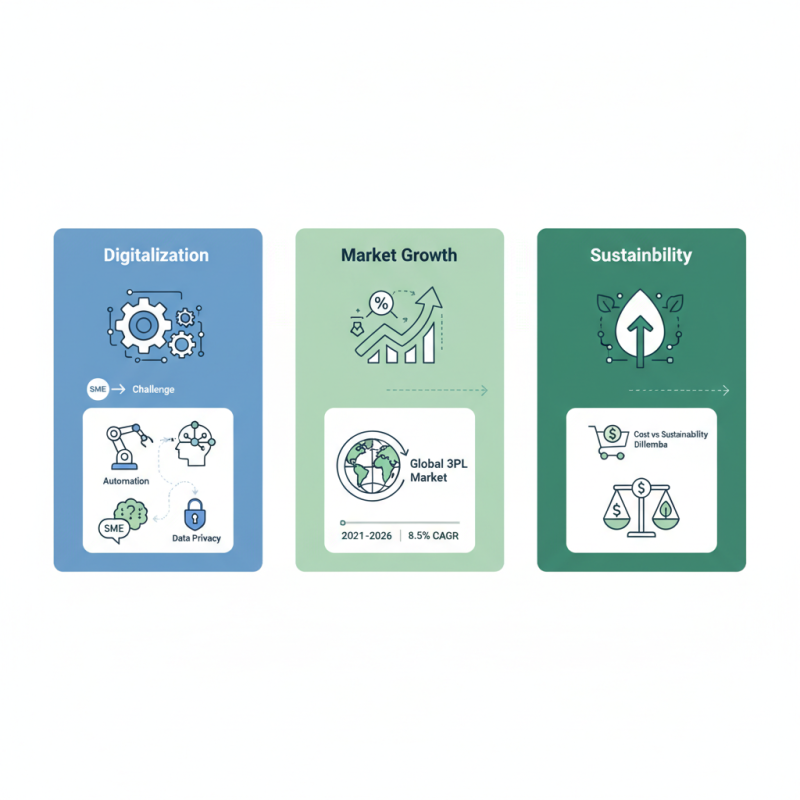
The logistics industry is evolving rapidly. Key trends are emerging in 3rd Party Logistics (3PL) as we approach 2026. According to a recent report by Mordor Intelligence, the global 3PL market is projected to grow at a CAGR of 8.5% between 2021 and 2026. Efficient supply chain management is increasingly crucial for businesses.
Digitalization in logistics offers new opportunities. Companies are adopting advanced technologies, such as automation and AI, to enhance efficiency. However, there are challenges to this transition. Many small to medium-sized enterprises struggle to implement these changes due to costs and expertise gaps. The reliance on data-driven decisions also raises concerns about data privacy and security.
Sustainability is another critical focus. A significant number of consumers prefer eco-friendly practices. The demand for green logistics solutions is on the rise, pushing 3PL providers to adapt. However, balancing cost and sustainable practices remains a dilemma for many companies. As the industry continues to adapt, these trends will shape the future of 3rd Party Logistics.
Emerging Technologies Shaping Third Party Logistics by 2026
The landscape of third-party logistics (3PL) is set to undergo significant changes by 2026, driven by emerging technologies. According to a recent industry report, automation and AI will play crucial roles in reshaping logistics operations. By 2026, it’s expected that 70% of 3PL companies will adopt AI solutions to enhance decision-making and improve efficiency. These technologies promise to minimize human error and optimize inventory management.
Blockchain technology is also gaining traction. Over 60% of logistics experts believe that blockchain will increase transparency in the supply chain. This technology can help track goods in real time, reducing the risk of fraud and streamlining processes. However, the implementation of such technologies is not without challenges. Many companies still struggle with integration and employee training.
Moreover, sustainability is becoming a core focus. A report indicates that 50% of logistics firms plan to invest in green technologies by 2026. While this shift is necessary, some companies face difficulties in balancing cost with eco-friendly practices. The transition to a more sustainable model is slow and often met with resistance. This complexity highlights the need for careful planning and adaptability in logistics strategies.
What are the Key Trends in 3rd Party Logistics for 2026?
| Trend |
Description |
Impact on Logistics |
Estimated Adoption Rate (%) |
| AI and Machine Learning |
Leveraging AI to enhance decision-making, optimize routes, and predict demand. |
Increased efficiency and reduced operational costs. |
85% |
| Blockchain Technology |
Enhancing transparency and security in supply chain transactions. |
Improved trust and traceability in logistics operations. |
70% |
| Robotics and Automation |
Implementing robotics for warehouse operations and delivery. |
Reduced labor costs and increased processing speed. |
60% |
| Sustainable Practices |
Adopting eco-friendly solutions in logistics operations. |
Enhanced brand image and compliance with regulations. |
75% |
| Internet of Things (IoT) |
Using IoT devices for real-time tracking and data collection. |
Enhanced visibility and proactive management of supply chain. |
80% |
Sustainability Practices in Third Party Logistics Strategies
As we look ahead to 2026, sustainability in third-party logistics (3PL) is becoming essential. Companies are seeking ways to minimize their environmental impact. They are increasingly opting for eco-friendly packaging materials. Using biodegradable options is one way to achieve this. Transitioning from plastic to sustainable alternatives can significantly reduce waste.
Energy efficiency is another crucial focus. Many logistics firms aim to improve their transportation methods. Electric vehicles are gaining traction in urban logistics. However, the infrastructure for charging stations is still developing. Addressing this gap is necessary for widespread adoption. Furthermore, incorporating renewable energy sources in warehouses can enhance sustainability efforts.
Despite these advancements, challenges remain. Not all companies are ready to implement sustainable practices. Limited budgets can hinder their initiatives. Some logistics providers find it hard to balance cost and eco-friendliness. Creating a culture of responsibility is vital for driving change. Encouraging businesses to adopt greener strategies starts with leadership commitment.
Evolving Consumer Expectations and Their Impact on Logistics Services
Evolving consumer expectations are reshaping the logistics landscape. In 2026, customers will demand faster delivery times and more transparency. They want to know exactly when their orders will arrive. This shift is pushing logistics providers to adapt quickly. They must embrace technology to meet these expectations. Real-time tracking systems are becoming essential.
Environmental concerns are influencing consumer choices, too. More people prefer eco-friendly shipping options. This trend poses a challenge for logistics companies. They must find ways to reduce their carbon footprint while maintaining efficiency. That's not easy. Innovative solutions are needed, and traditional methods may not suffice.
However, customer service remains critical. Many logistics firms struggle to provide personalized support. Automated responses often lack the human touch. Consumers feel frustrated when issues arise. Companies should invest in improving support systems. A balance between technology and personal interaction is key. Meeting these evolving expectations is vital for success in logistics.
Key Trends in 3rd Party Logistics for 2026
This bar chart illustrates the anticipated growth in key trends affecting third-party logistics services by 2026. The data highlights the importance of technological advancements, sustainability practices, and evolving consumer expectations in shaping logistics strategies.
The Role of Data Analytics in Enhancing 3PL Efficiency and Effectiveness
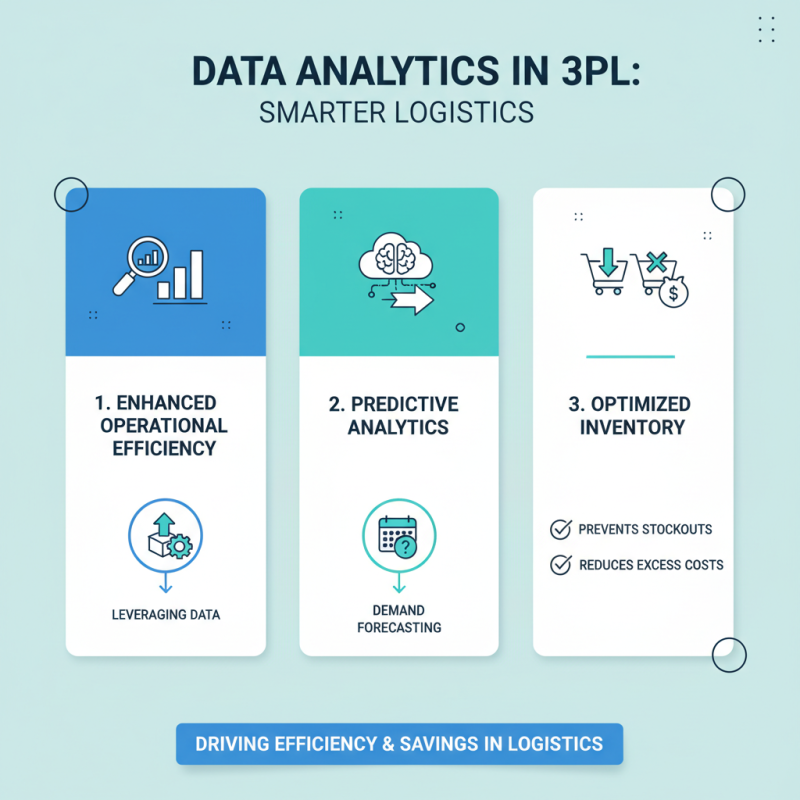
In the evolving landscape of third-party logistics (3PL), data analytics plays a crucial role. Logistics providers are increasingly leveraging data to enhance their operational efficiency. For instance, predictive analytics can forecast demand, allowing better inventory management. This is critical in avoiding stockouts and excess inventory, which can lead to unnecessary costs.
However, not all organizations effectively use data analytics. Many struggle with data quality and integration issues, resulting in inaccurate insights. The challenge is often in the data collection process. Companies must ensure they gather relevant, timely information to drive decision-making. This involves continuous monitoring and assessment of data sources.
Moreover, while data-driven decisions can improve performance, they come with their own set of limitations. Relying heavily on data may overlook the human element of logistics, such as customer preferences and market trends. Balancing quantitative analysis with qualitative insights is essential for comprehensive strategies. As the industry moves toward 2026, embracing both data analytics and human intuition will be vital for 3PL success.
Adapting Supply Chain Resilience: Trends in Risk Management for 2026
As we look ahead to 2026, supply chain resilience becomes crucial. Companies must rethink their risk management strategies. Natural disasters, pandemics, and geopolitical tensions can disrupt logistics. A diverse supplier base helps mitigate these risks. Businesses are evaluating where to source.
Technology will play a significant role in adapting to these challenges. Real-time data analytics will be essential. This allows firms to make informed decisions quickly. But the reliance on technology also has its flaws. Cybersecurity threats are an ever-present concern. Companies must invest in robust security measures. This will ensure data integrity and reduce vulnerabilities.
Moreover, companies will need to focus on collaboration. Working closely with third-party logistics providers can strengthen resilience. Transparent communication channels are vital for success. This might involve sharing sensitive data, which raises trust issues. Reflecting on past failures can guide better strategies. Ultimately, risk management in logistics will remain a dynamic challenge.