10 Essential Tips for Enclosed Auto Shipping Success
Enclosed auto shipping has become a crucial service for car enthusiasts and collectors. It provides protection and security for valuable vehicles during transport. Many individuals seek expert guidance to navigate this process. According to John Smith, a seasoned auto transport expert, “Choosing the right method for enclosed auto shipping can save you time and potential damage.”
In enclosed auto shipping, proper planning is key. Consider the vehicle's size, value, and any special requirements. Each car has unique needs. Some may require additional care. Understanding these elements can significantly impact the shipping experience. Failing to do so might lead to unnecessary problems down the line.
Every detail matters in enclosed auto shipping. From selecting a reputable carrier to tracking your vehicle during transit. Even minor lapses can result in stress or damage. Reflecting on past experiences can guide better decisions. Trust your instincts and prioritize what works for you.

Understanding Enclosed Auto Shipping: The Basics
Enclosed auto shipping is a specialized method that offers protection for vehicles during transport. This process involves using a fully enclosed trailer, shielding the car from external elements. According to industry data, over 70% of high-value cars are shipped this way to prevent damage.
Understanding the basics of enclosed auto shipping can lead to better choices. It's essential to assess the condition and value of your vehicle when considering this option. Some may assume that all shipping methods are the same, but enclosed transport offers greater security. On average, vehicles shipped in enclosed transports incur 30% less damage than those sent using open carriers.
However, the cost can be a drawback. Enclosed shipping is typically 40% more expensive than open transport. Not everyone factors this into their budget. Research has shown that while many prioritize low prices, vehicle safety should be paramount. Hidden costs can arise, too. It's important to clarify all charges before committing. Understanding these factors ensures better decision-making in the long run.
Benefits of Choosing Enclosed Auto Transport for Your Vehicle
Enclosed auto transport offers significant advantages. It protects vehicles from various environmental factors during transit. For instance, rain, snow, or harmful UV rays can damage a car's exterior. According to industry reports, enclosed shipping reduces the risk of exterior damage by nearly 80% compared to open transport. This can be crucial for luxury and classic cars, where any imperfection can significantly affect value.
Additionally, enclosed auto transport provides a higher level of security. Vehicles are usually locked inside a trailer, minimizing theft risks. An investigation revealed that theft occurs less frequently in enclosed shipments, with rates dropping by about 60%. This aspect is critical for owners who invest heavily in their vehicles. However, costs can be substantially higher, which may deter some customers.
Compromises may arise regarding shipping time. Some customers report longer wait times for enclosed shipments due to limited carrier availability. It’s essential to consider these factors carefully. Balancing cost, time, and protection can be challenging, yet understanding the benefits makes it easier to make informed decisions.
10 Essential Tips for Enclosed Auto Shipping Success
Preparing Your Vehicle for Enclosed Shipping: Key Steps
Preparing your vehicle for enclosed auto shipping is crucial for a successful transport experience. First, ensure your car is clean, both inside and out. This not only helps with inspections but also lets you spot any existing damages. According to industry data, about 32% of claims arise from unnoticed scratches and dents. Documenting your car’s condition through photos can serve as proof if issues arise later.
Next, reduce the fuel level to about a quarter tank. This minimizes weight and potential hazards during transport. Be mindful to remove personal items from the vehicle. Many carriers advise against leaving anything inside, as lost items account for around 15% of shipping complaints. Loose items can shift during transit, causing unexpected damage.
Consider additional protections, such as securing movable parts. Ensure mirrors and antennas are adjusted to avoid breakage. Check tire pressure and battery health; weak batteries contribute to about 12% of transportation delays. Remember to communicate any specific concerns with your carrier.
These steps are vital for safeguarding your vehicle during enclosed shipping. The preparation may seem tedious, but overlooking minor details can lead to significant consequences during transport.
Selecting a Reliable Enclosed Auto Shipping Company
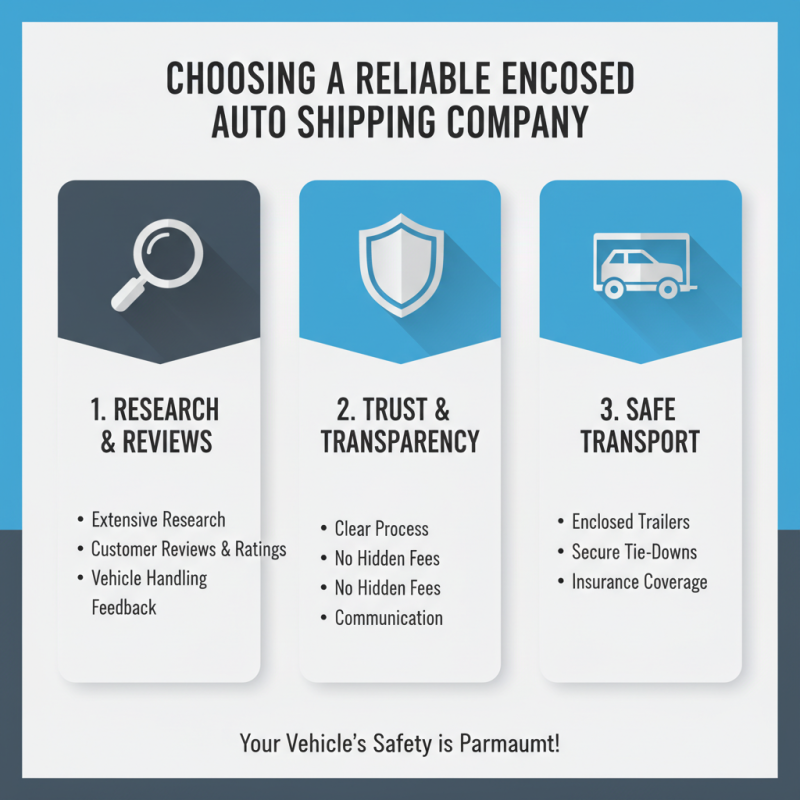
Choosing a reliable enclosed auto shipping company is crucial for the safe transport of your vehicle. Start by researching potential companies extensively. Look for customer reviews and ratings to gauge their service quality. Pay attention to feedback about their care in handling vehicles. A trustworthy company will have a transparent process, ensuring you feel comfortable throughout the shipment.
Consider their experience in enclosed transport. Companies with a long track record are often more reliable. They understand the nuances of safely transporting various types of vehicles. Inquire about their insurance options. A good policy protects your investment during transit, providing peace of mind.
Keep an eye out for red flags. If a company has no clear communication or lacks professionalism, reconsider your choices. After all, your vehicle deserves the best care. Lastly, it might be helpful to request quotes from multiple companies. This allows you to compare not just prices but services offered. Ensure the company clarifies every detail to avoid any last-minute surprises.
Managing Costs: Budgeting for Enclosed Auto Shipping Services
When planning for enclosed auto shipping, budgeting is crucial. Start with understanding the costs involved. Costs can vary depending on distance, vehicle size, and service level. Research average rates. Compare quotes from several providers. It’s easy to underestimate expenses. Hidden fees may arise, such as fuel surcharges or insurance costs.
Remember, opting for the lowest price might not be wise. Cheaper services can have trade-offs. Look for quality in enclosed shipping. Check reviews and ratings. It's vital to balance cost with reliability. When you commit to shipping, ensure all aspects are clear. Ask questions about the transport process and timelines. These details can impact your budget.
Finally, factor in your expectations. Think about how long you can wait for delivery. Sometimes, faster transport will incur higher costs. Don’t overlook additional services too. Options like tracking or door-to-door delivery often come with extra charges. Having a comprehensive understanding will lead to informed decisions and a smoother shipping experience.
10 Essential Tips for Enclosed Auto Shipping Success - Managing Costs: Budgeting for Enclosed Auto Shipping Services
| Tip |
Description |
Estimated Cost ($) |
Potential Savings ($) |
| 1. Research Providers |
Compare multiple auto shipping providers to find competitive rates. |
1500 |
300 |
| 2. Book in Advance |
Planning your shipment ahead of time can help avoid last-minute costs. |
1600 |
200 |
| 3. Flexible Timing |
Select non-peak shipping times to reduce costs. |
1400 |
250 |
| 4. Understand Pricing Models |
Familiarize yourself with how different providers price their services. |
1500 |
100 |
| 5. Choose the Right Type of Transport |
Select between enclosed and open transport based on needs and budget. |
1700 |
400 |
| 6. Ask About Discounts |
Inquire if they offer discounts for military, students, or referrals. |
1550 |
200 |
| 7. Inspect Vehicle Condition |
Ensure vehicle is in good condition to avoid added fees. |
1600 |
150 |
| 8. Read Reviews |
Look for customer feedback to choose reputable shipping services. |
1500 |
250 |
| 9. Track Your Shipment |
Ensure your provider offers tracking for peace of mind. |
1600 |
200 |
| 10. Plan for Additional Costs |
Account for potential fees like fuel surcharges or additional insurance. |
1700 |
300 |