How to Optimize Less Than Truckload Shipping in 2026?
In 2026, optimizing Less Than Truckload Shipping (LTL) requires a fresh approach. The logistics industry is evolving rapidly, and businesses must adapt. Every shipment matters, especially when it’s not a full truckload. With the right strategies, companies can reduce costs and enhance delivery times.
Understanding the specific needs of LTL shipping is essential. It often involves multiple stops and varied freight. The challenge lies in balancing efficiency and reliability. Businesses need to reflect on their current methods. Are they using the best routes? Is the packaging suitable for LTL?
Investing in technology will play a crucial role. Real-time tracking and data analytics can help improve service. However, relying too much on automation can lead to oversights. Personal touch still matters in logistics. Reflecting on this balance is key for future success in Less Than Truckload Shipping.
Understanding the Growth Trends in Less Than Truckload Shipping for 2026
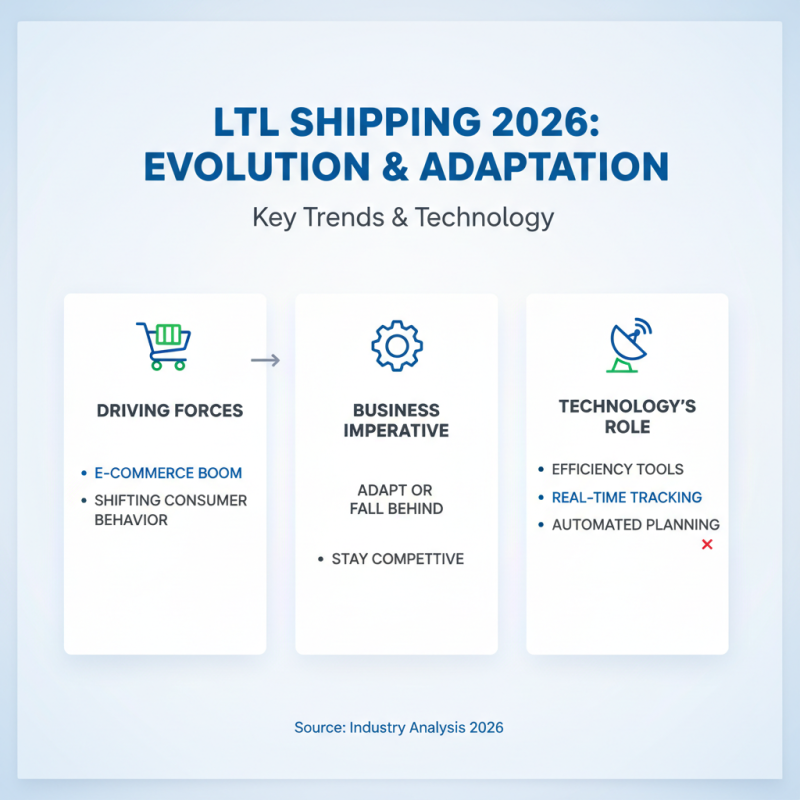
As we look toward 2026, the landscape of Less Than Truckload (LTL) shipping is evolving. Growing e-commerce demands and shifts in consumer behavior drive this change. Businesses must adapt to these trends to stay competitive. Technology plays a pivotal role. Tools like real-time tracking and automated shipment planning enhance efficiency. Yet, some companies still struggle to fully integrate these solutions.
The focus on sustainability is also becoming vital. More businesses are prioritizing eco-friendly practices. Using greener transportation options can reduce overall emissions. However, implementing these changes is not always straightforward. Many organizations face obstacles like higher initial costs and the challenge of sourcing sustainable materials.
Customer expectations are rising too. Timeliness and reliability are crucial in LTL shipping. Delays can hurt brand reputation. Companies that fail to meet these demands risk losing customers. Simplifying communication and ensuring transparency throughout the shipping process are essential. Some businesses will need to reevaluate their current strategies to ensure they meet the evolving needs of their consumers in 2026.
Analyzing the Impact of E-commerce on LTL Shipping Efficiency
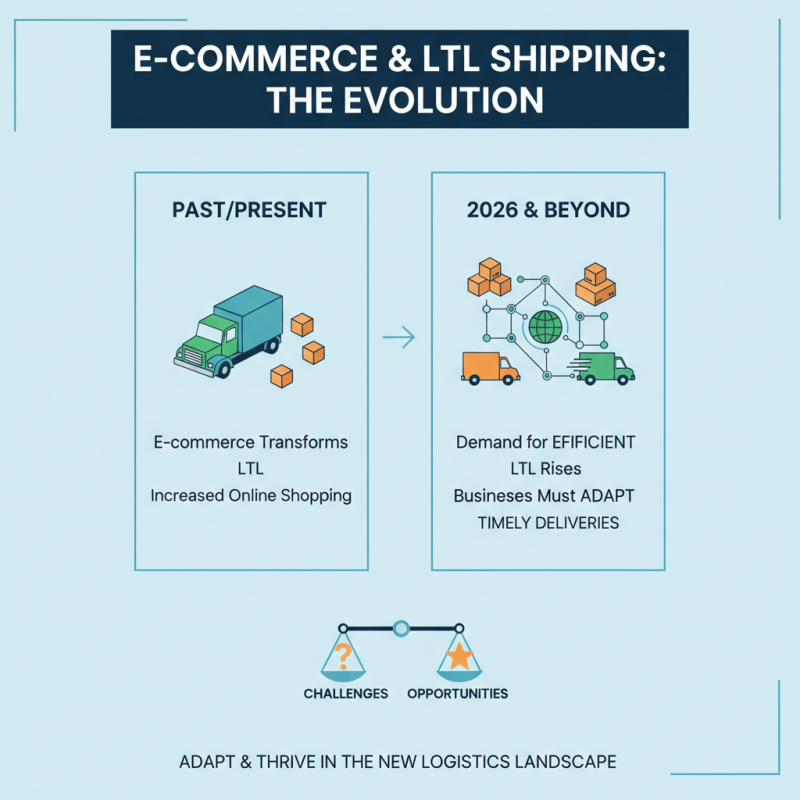
E-commerce has transformed Less Than Truckload (LTL) shipping. In 2026, the demand for efficient LTL services will rise. The increase in online shopping means businesses must adapt quickly. Shippers need to streamline operations, ensuring timely deliveries. This shift brings both opportunities and challenges.
To enhance shipping efficiency, consider these tips. Invest in technology for better tracking. Real-time updates can help your customers feel more secure. Use data analytics to optimize routes. This can save time and reduce costs. Additionally, focus on consolidating shipments. Fewer, larger shipments can improve efficiency.
Another aspect to think about is communication. Maintain open lines with carriers. Discuss issues as they arise. Encourage feedback from customers and employees. Use their insights to improve services. As e-commerce continues to grow, understanding these nuances is essential. Reflect on your current strategies. Are they enough for the evolving market? Adjust accordingly for success.
Leveraging Technology for Better Tracking and Logistics in LTL Shipping
In 2026, technology plays a crucial role in optimizing Less Than Truckload (LTL) shipping. Real-time tracking systems enhance transparency. This transparency is key for logistics managers. According to industry reports, 70% of freight professionals cite visibility as a top priority. Implementing GPS tracking and IoT sensors can significantly improve shipment monitoring.
Data analytics further aids decision-making. By analyzing shipping patterns, companies can better predict delays. The transportation industry has seen a reported 20% reduction in operational costs through improved route planning. However, not all solutions yield immediate results. Some firms struggle with integration issues, impacting their efficiency.
Automation in warehouse management systems also streamlines pick-and-pack processes. Industry experts agree that up to 50% of time can be saved with these technologies. Yet, companies must train their workforce adequately. A tech-savvy team ensures smooth adaptations and minimizes disruptions. Adopting technology is an ongoing journey, altering how LTL shipping functions.
Key Industry Metrics for Measuring LTL Shipping Performance in 2026
In 2026, measuring Less Than Truckload (LTL) shipping performance becomes crucial. Industry metrics provide insights into efficiency and cost-effectiveness. A recent report highlights that the average LTL shipment cost rose by 8% last year. Companies need to analyze these figures critically. Are they managing to stay competitive?
On-time delivery rates are another key metric. Currently, the industry averages around 85%. This shows that timely performance remains a challenge. Missed deadlines can lead to dissatisfied customers. Monitoring discrepancies in regional performance can reveal areas for improvement.
Operational efficiency is equally important. The transportation sector has reported an average of 9% increase in empty miles traveled. This inefficiency burdens profits. To combat this, businesses must adopt better routing technologies. Review your current methods. Are they truly effective? Addressing these metrics can transform LTL shipping in 2026.
Optimization of Less Than Truckload (LTL) Shipping in 2026
This chart displays key performance metrics for Less Than Truckload (LTL) shipping as we move into 2026. The metrics include On-Time Delivery Rate, Cost per Shipment, and Damage Rate.
Best Practices for Cost Reduction in Less Than Truckload Shipping
As businesses look towards 2026, optimizing Less Than Truckload (LTL) shipping is crucial. Cost reduction is a primary goal for many organizations. One effective practice is load consolidation. By grouping shipments, businesses can maximize vehicle capacity. This reduces the number of trips and lowers overall transportation costs. A well-planned route can save time and fuel. However, this requires careful coordination to ensure timely deliveries.
Another tactic involves choosing the right shipping partners. Businesses should evaluate carriers based on performance, price, and reliability. Relationship building can lead to better rates. It's worth revisiting contracts regularly. Are the terms still favorable? Sometimes, renegotiating can uncover new savings. Yet, it’s important to balance cost with service quality. A cheaper option might not always deliver on time.
Lastly, adopting technology can enhance visibility in the shipping process. Real-time tracking allows shippers to monitor progress. This knowledge can prevent delays and help manage customer expectations. Yet, the implementation of new systems can be a challenge. Training staff and getting buy-in are often overlooked. Reflecting on these obstacles can lead to more efficient shipping solutions in 2026.