
Choosing Cargo Forwarding Services in 2026 means looking beyond a low freight quote. A shipment may pass through several hands before reaching a warehouse: pickup, port handling, customs documentation, and final delivery. Small gaps matter. A missed cutoff can add days, while unclear accessorial charges can distort apparent savings. The right provider should explain route options, service limits, and responsibilities in plain terms.
Start by checking whether the forwarder regularly handles your cargo type, shipment size, and origin-destination lanes. Ask for a sample milestone timeline, a named escalation contact, and a written quote that separates transport, handling, and likely surcharges. Find out how updates are delivered and how exceptions are managed when a vessel is delayed or a connection is missed. Reliable tracking helps, but it cannot prevent disruption. A thoughtful forwarder will say so.
Review insurance options, claims steps, references, and the accuracy of past delivery estimates. Confirm that the provider supports complete shipping documentation and can coordinate with qualified customs professionals when needed. Do not judge capability by a polished dashboard alone. Ask who answers when a shipment is held. That detail matters. No checklist removes every risk, and shipping patterns can change during the year. Comparing Cargo Forwarding Services against actual operating needs, rather than promises, gives you a clearer basis for choosing a dependable partner.

Choosing cargo forwarding services in 2026 starts with a precise shipment brief. Describe the goods, packaging, and delivery point. Record each piece’s dimensions, gross weight, and whether it can be stacked. A pallet of boxed parts needs different handling from a long, delicate instrument. Note any temperature, moisture, or careful-loading requirements. Small details matter.
Map the full route, not just the departure and arrival cities. Include pickup access, transfer points, and whether delivery is needed to a warehouse, home, or job site. Share your preferred delivery window and how flexible it is. Ask forwarders to explain transit estimates, tracking updates, and what happens if a connection is missed. Your first estimate may be off; update it once packaging and quantities are final.
Tips: Send the same shipment details to each provider so quotes are comparable. Ask whether charges include pickup, handling, and final delivery. Confirm who will contact you if plans change. Keep a little schedule room; even a well-planned route can face delays.
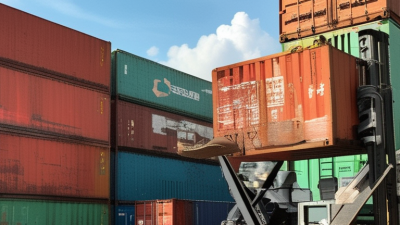
Define your cargo, route, and delivery requirements before selecting a forwarding service.
Cargo volume can help you shortlist a container size: a 20-foot dry container holds about 33.2 m³, a 40-foot dry container about 67.7 m³, and a 40-foot high-cube container about 76.3 m³. These are typical nominal internal volumes; specifications and usable capacity vary by container. Confirm cargo dimensions, weight, loading method, route availability, and delivery deadline with your forwarder before booking.
In 2026, assess a cargo forwarder’s experience against your actual route, shipment size, and handling needs. Ask for examples of comparable shipments, including how delays or damaged paperwork were handled. A confident sales pitch is not enough. Ask for the name and role of your day-to-day contact, plus a clear escalation path. Details matter. If your goods need careful temperature control, confirm how readings are recorded and who responds to an alert.
A broad network can help, but check who handles each transfer. Ask whether local partners are directly managed, how shipment updates reach you, and what happens when a sailing changes. It is easy to overvalue a map full of office locations; coverage matters only when someone owns the handoff. Regulatory readiness deserves the same scrutiny. Ask how the forwarder tracks changing documentation requirements, checks shipment data, and retains records. Request a sample checklist, with sensitive details removed. Verify important requirements through current official guidance or a qualified customs professional. A clear answer should name the responsible person, the documents reviewed, and the timing—not promise that every shipment will move without a hitch.
Compare service options by shipment size, route, transit time, and handling needs. Ocean freight can suit bulky, non-urgent loads; air freight offers speed but usually costs more. UNCTAD’s Review of Maritime Transport 2024 notes that shipping carries over 80% of global merchandise trade by volume. That scale does not make every route predictable. Ask providers for typical transit ranges and how they report delays.
Technology should make decisions easier, not just look impressive. Check whether shipment tracking shows useful milestones, estimated arrival changes, and clear contacts for exceptions. Test the process with a real shipment before relying on dashboards. Small delays matter. A polished portal cannot fix slow responses.
Compare total landed logistics costs, not headline freight rates. Request itemized quotes covering fuel or peak surcharges, terminal handling, documentation, storage, and delivery. The CSCMP 2024 State of Logistics Report estimated U.S. business logistics costs at 8.7% of GDP in 2023; this is a broad benchmark, not a quote for your cargo. Compare like with like, including insurance and service limits. No scorecard is perfect. A spreadsheet may miss the cost of a late delivery, so weigh reliability against price.
When comparing cargo forwarding services in 2026, ask for references from shippers with similar routes, cargo types, and delivery deadlines. Request two recent contacts, then ask about missed connections, damage claims, and how quickly the forwarder communicated problems. A glossy case study is not enough. A neat spreadsheet is not proof.
Check performance records over at least six to twelve months. Look for on-time delivery rates, booking acceptance, transit-time variation, and claim-resolution times. Sea-Intelligence’s 2024 Global Liner Performance reports showed global vessel schedule reliability hovering around the mid-50% range in many months. That is a useful warning: a forwarder’s promised transit time is not the same as a vessel’s actual reliability. Ask how the provider measures its own results and whether late shipments are counted consistently.
The World Bank’s 2023 Logistics Performance Index evaluates six areas, including timeliness and tracking and tracing. Use those measures to shape your questions, not as a substitute for checking a company’s own records. Ask to see anonymized shipment milestones, such as pickup scans, port departure updates, and proof of delivery. Compare the same lane and service level across providers. Small gaps matter. Records may still be incomplete, and even experienced teams can misread a delayed scan as a delayed shipment; ask how exceptions are verified.
A reliable cargo forwarding agreement should describe the work in measurable terms. Specify the route, transport mode, pickup window, delivery deadline, and who handles each handoff. Define “on time” clearly: does the clock stop at the port, warehouse, or final delivery address? Require timestamped milestones, proof of delivery, and prompt alerts when a shipment misses a cutoff. Include an escalation contact and a review process for repeated service failures. Clear terms matter. The World Bank’s 2023 Logistics Performance Index assesses 139 economies across six dimensions, including tracking and tracing and timeliness. Those measures are useful reminders: a low quoted rate does not show whether a provider can keep a shipment visible and on schedule.
Track results against agreed service levels, not vague promises. A monthly scorecard can compare on-time delivery, transit-time variation, unreported delays, cargo damage, and invoice differences. For example, record when a pallet leaves the origin warehouse, reaches the export terminal, clears each handoff, and arrives at the receiver. UNCTAD’s Review of Maritime Transport 2024 notes that more than 80 percent of international trade in goods by volume moves by sea, making port milestones especially useful for ocean freight. Still, a dashboard can look reassuring while one handoff remains unrecorded. That is easy to miss. Review exceptions with the forwarder, check the supporting timestamps, and adjust the service terms when recurring delays reveal a weak point.
| Area to Evaluate | Contract Term or Metric | What to Specify or Track | Practical Review Point |
|---|---|---|---|
| Scope of service | Included and excluded tasks | List pickup, export documentation, customs coordination, main carriage, destination handling, delivery, and any warehousing separately. | Confirm who performs each task and who is responsible for charges or delays at each handoff. |
| Rates and surcharges | Written rate schedule and validity period | Identify the shipment basis, currency, chargeable weight or volume method, quoted services, accessorial charges, and conditions that may change the price. | Require itemized approval before non-emergency additional charges are incurred. |
| Transit time | Estimated transit time and measurement points | Define when transit time starts and ends, the planned route or service type, and how weekends, holidays, customs holds, and other exceptions are treated. | Compare like-for-like routes and modes; treat estimates as distinct from guaranteed delivery commitments. |
| Shipment milestones | Event timestamps and status definitions | Track booking confirmation, cargo receipt, departure, arrival, customs release, out-for-delivery, and proof of delivery where applicable. | Agree how quickly milestone updates must be posted and how missing or corrected events are handled. |
| Tracking visibility | Update frequency and exception alerts | Specify the tracking channel, shipment reference format, expected update cadence, and notification process for delays, route changes, or documentation issues. | Test tracking with a sample shipment before rollout and identify a contact for unresolved status gaps. |
| On-time performance | On-time delivery rate | Calculate shipments delivered by the agreed date divided by eligible shipments, and define exclusions and the reporting period. | Review results by lane and service type; establish a baseline before setting improvement targets. |
| Delivery reliability | Proof of delivery and exception records | Capture delivery date and time, recipient or delivery confirmation, and documented exceptions such as refused or incomplete delivery. | Set a deadline for providing delivery evidence and a process for investigating discrepancies. |
| Claims and liability | Liability limits, notice periods, and claim procedure | State applicable liability terms, required supporting documents, claim submission steps, and relevant legal or carriage rules. | Review the contract and applicable transport documents; do not assume cargo insurance is included. |
| Communication and escalation | Named roles and response expectations | Identify operational and escalation contacts, service hours, preferred channels, and the information needed to open a case. | Agree how urgent shipment exceptions are escalated and how open cases are followed through to closure. |
| Performance review | Monthly or quarterly scorecard | Review on-time delivery, milestone completeness, exception response time, invoice accuracy, and claims status using agreed definitions. | Record actions, owners, and due dates; revise service targets only through a documented agreement. |
Note: Performance measures and service commitments should be defined for the specific route, transport mode, cargo, and operating conditions. Confirm applicable contract terms and transport regulations before signing.